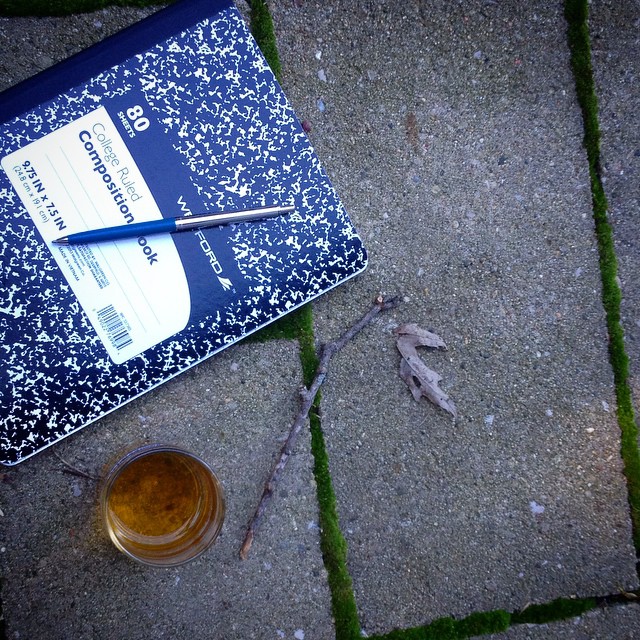
A glass of scotch, a new notebook and my favorite pen. Hello, heaven.

A glass of scotch, a new notebook and my favorite pen. Hello, heaven.
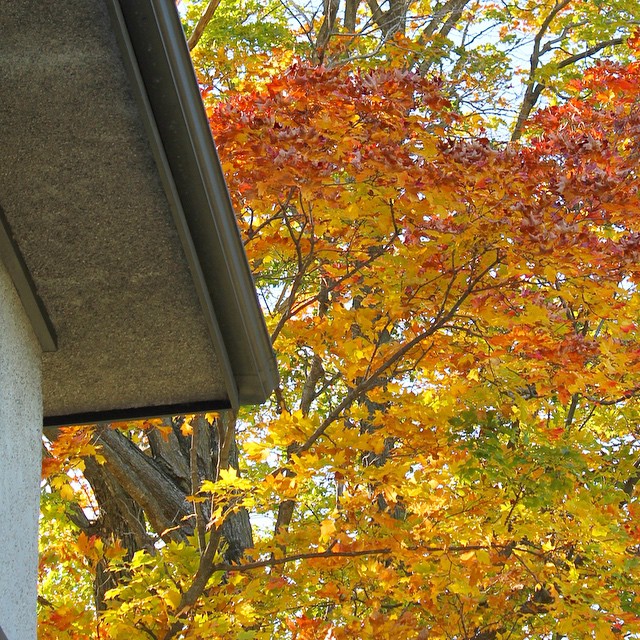 These gold toned leaves are gorgeous up on the tree. Maybe not so much when they settle on the lawn.
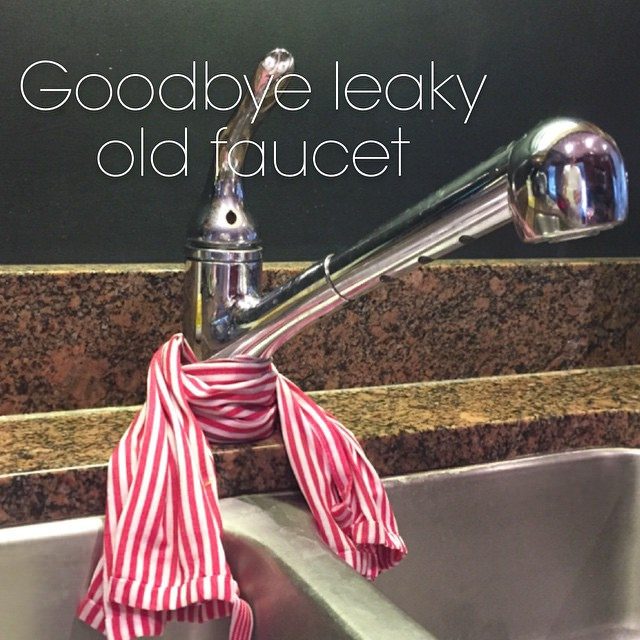
Apparently the developer who rehabbed our condo building back in the early 2000s used some of the cheapest materials he could find. Over the past seven years everything that was new in the condo has failed. Take this faucet on the kitchen sink, for instance. Within a few months of moving into our condo the faucet started leaking. Not a slow drip kind of leak, mind you. That we could live with. No, this leak came out of a hole in the back of the faucet and would slowly flood the entire counter top.
Over the years I’ve found some little fixes for the faucet but the leak would always return. And then a month or so ago the leak became intolerable. If we didn’t tie a towel around the base of the faucet, water would shoot out of the back of it and flood the counter top. The towel would get soaked but at least it would absorb some of the water and also divert it into the sink instead of onto the counter. I lived with the towel wrapped around the faucet for a few weeks but I would groan every time I saw it.
And then one day I said to The Mister, “It can’t be that hard to replace a faucet. I think I can do it myself.”
I pulled up my old friend Google and searched around for faucet replacement tutorials. And you know what? Replacing a faucet is actually one of the easiest DIY plumbing projects in the history of ever!
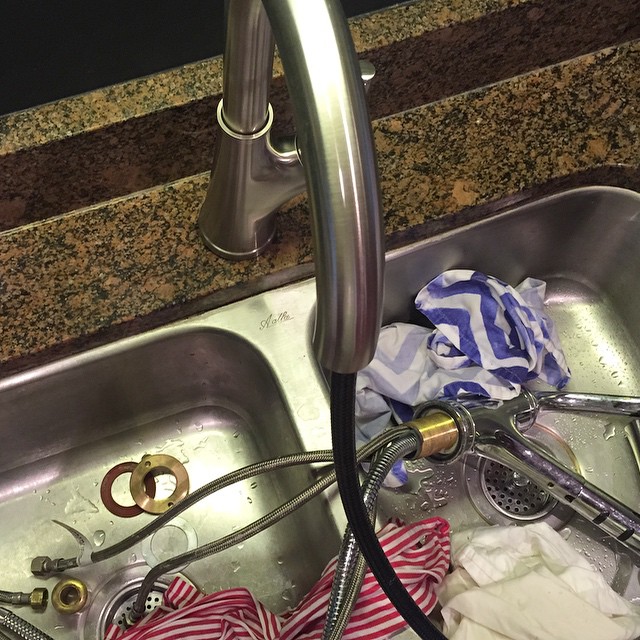
I’ve learned my lesson from past hubris when it comes to DIY projects. Sometimes a project may seem easy at first glance but then when I’m elbow deep in grease and screwdrivers I realize that it’s not easy at all. With that in mind I watched a few tutorial videos before I finally accepted that this was a project I could tackle on my own. The video I found most helpful was this tutorial from Lowes. In fact, I was going to try to photograph my own faucet replacement so that I could write a tutorial but this video is so good that that didn’t seem necessary.
After watching that video a few times I was totally confident that this was a project I could handle on my own. And I was right! In fact, the only trouble I encountered with the project was disassembling the old faucet to remove it. Oh, and of course, it wasn’t exactly a picnic contorting my body under the kitchen sink. How do plumbers do that all day?
With the old faucet removed (and after I did a little happy dance because I wouldn’t have to deal with its leaks ever again) it was quite easy to install the new faucet. It’s really just a matter of slipping the faucet into place, securing it to the counter from underneath and then connecting the water lines. The new faucet I bought – the Cantara by Pfister – even came with a handy tool that made securing it to the counter super easy.
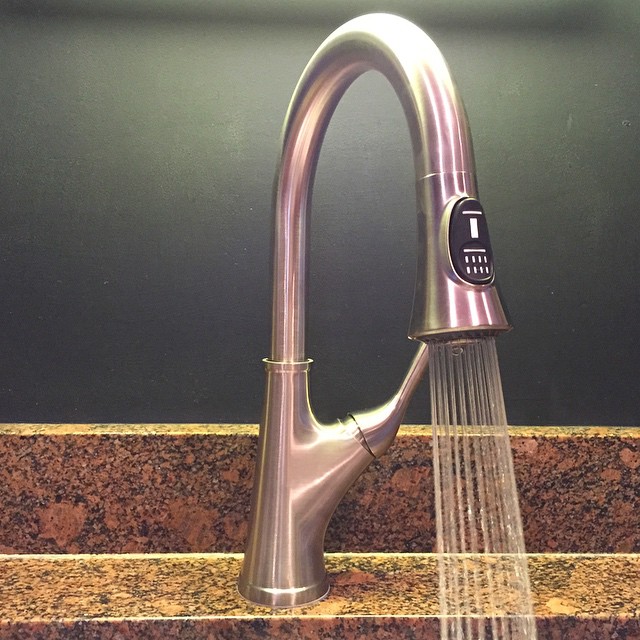
Oh, new faucet. You make me so happy! I never liked that old faucet to begin with. It was too short to be useful and the sprayer was always a bit wonky. This new faucet works like a charm and the arched spout makes it super useful.
Of course the best part of any DIY project (besides economics) is the satisfaction of knowing that I DID IT ALL ON MY OWN! Every time I walk past the kitchen sink I am filled with a sense of accomplishment. Plus, I never had to witness plumber butt during the installation of the faucet!
Images: This American House
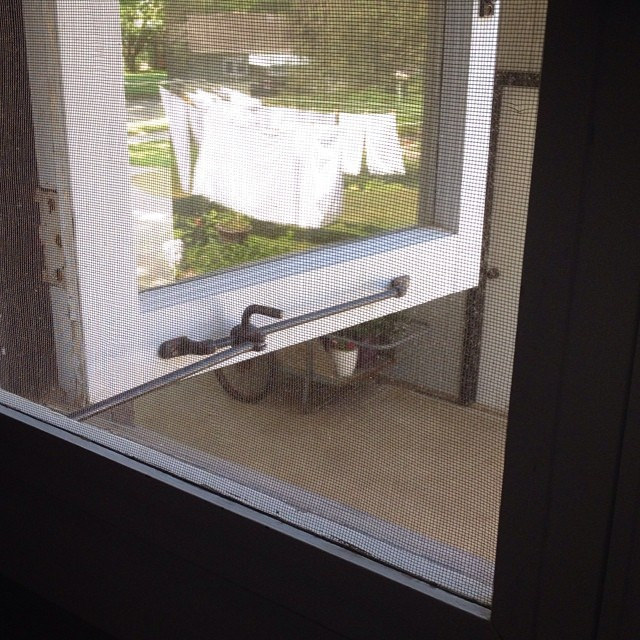
The summer of 2014 will be forever remembered as the time that I rediscovered my love of the clothesline.
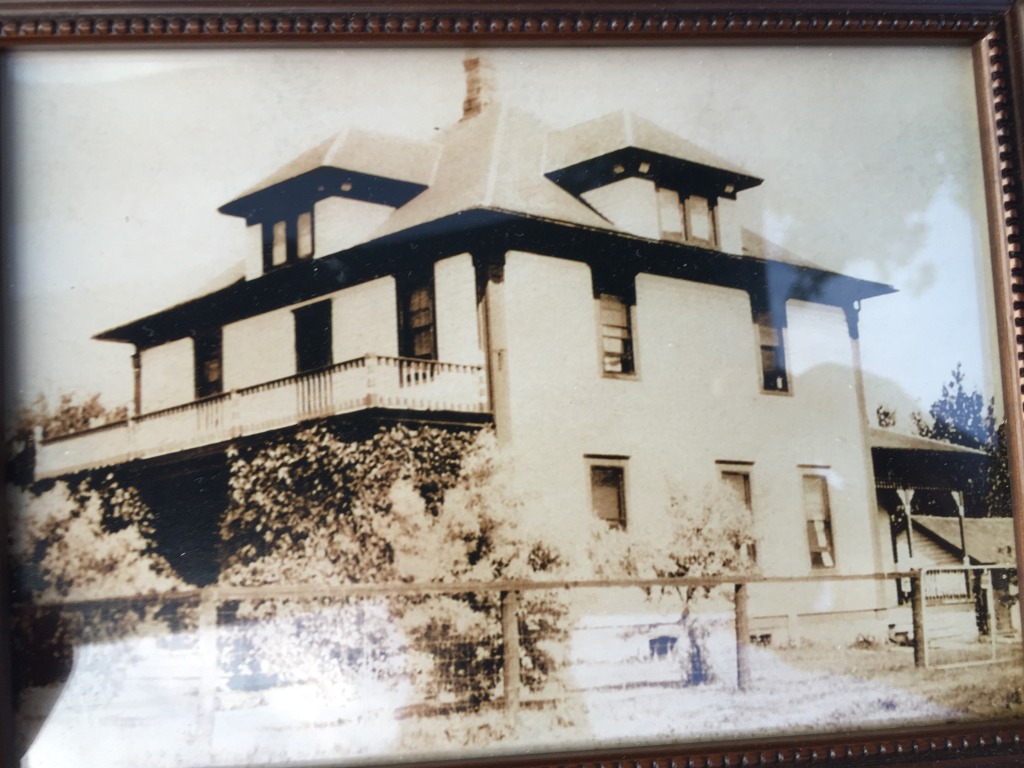
One of the unexpected delights of buying the house in Iowa was the discovery that my dad’s 97-year-old aunt, Ethel, and her son Dwight live just 20 miles away. It’s been wonderful getting to know them both better, and to learn from them more about my family’s history and Scandinavian heritage.
It’s been especially exciting and fascinating, however, to discover that my family’s old farmhouse in North Dakota was a Sears “kit” house, just as the Dream House is a product of Frank Lloyd Wright’s similar system of “manufactured” homes. The Carlson house was a large structure, built in 1908 to accommodate a family of ten on their prosperous wheat farm. It cost a remarkable $1500 to build (which equates to just over $38,000 in 2014 dollars). Our house was built just nine years later at a cost of $2200 (about $40,000 in today’s currency).
The Sears catalog homes remained a popular, affordable option for untold thousands of American homeowners from 1908 through 1940. The American System-Built Homes, Wright’s early effort to enter the mass manufactured housing market, would not prove as successful. Only a handful of his ASB Homes were constructed before the scheme fell apart due to World War I materials shortages, and personal discord between Wright and his business partner, lumber magnate Arthur L. Richards. Wright would later reenter the “affordable” housing market with his more successful Usonian homes.
While the Dream House still stands, it’s been my understanding that the Carlson farmhouse was demolished some years ago. Or so I thought. On a recent visit with Cousin Dwight, he said that he had been told by another relative that the house wasn’t razed after all, but had been moved to some nearby town. Hmm. Do you think Sherlock Holmes and Dr. Watson make “house” calls?
– Michael
Image: This American House