
Browsing Category

history

American System-Built Home, architecture, history, iowa, Prairie School

Prairie School in Iowa: Support Iowa Architectural Foundation

01/25/2021

We’re excited to be partnering with the Iowa Architectural Foundation as part of their Prairie School Architecture in Iowa class. This 3-part virtual class – held February 9, 16 23 – will include 3 home tours – our American System-Built Home and two Walter Burley Griffin-designed homes in Mason City! See all the details below and consider joining us! This is a fundraiser for Iowa Architectural Foundation and a great way to see three wonderful houses without leaving the comfort of your own home.

Early Bird Tickets @ $35 are available only until 7PM on Feb 1; after that, $45 at EVENTBRITE.

February 9, 7-8:30 PM: Virtual Class led by Paula Mohr, PhD and Ryan Ellsworth, AIA

In the first half of the twentieth century, Iowa was a significant player in the development of what later came to be known as the Prairie School of architecture. This 3-part course will explore some of Iowa’s internationally renowned Prairie School buildings, such as works designed by Frank Lloyd Wright and Walter Burley Griffin. We’ll look at examples located across the state, including the Woodbury County Courthouse and Mason City’s Rock Crest-Rock Glen as well as less famous examples located in small towns throughout the state.

February 16: Tour #1 – The Meier House, designed by Frank Lloyd Wright, Monona, Iowa
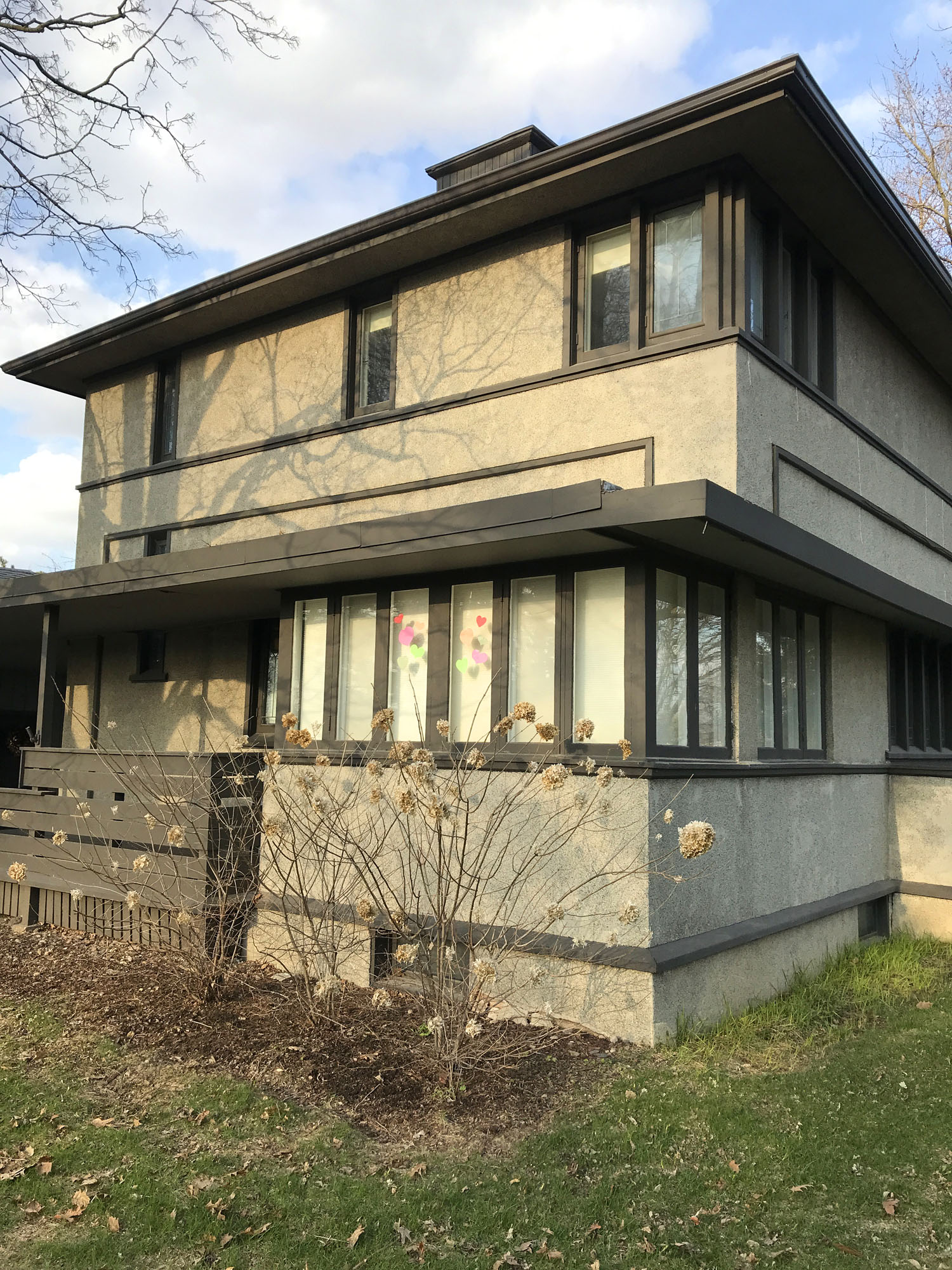
Virtual tour of the Meier House, the only Iowa example of the American System-Built House designed by Frank Lloyd Wright. Join homeowners Jason Loper and Michael Schreiber as they explain their fascinating stories of finding and restoring this beautiful home. Motivated by Wright’s lifelong interest in affordable housing, he designed these homes between 1911 – 1917. The tour will be followed by a Q&A with the homeowners, our instructors and attendees.

February 23: Tour #2 & #3 – The Schneider House and The Page House, designed by Walter Burley Griffin, Mason City, Iowa – Virtual tours of both the Schneider House and the Page House in the Rock Crest-Rock Glen development in Mason City, the first planned Prairie School development in America. Homeowners Tim & Joan Platz and Gary & Anne Schmit will take you through their amazing homes and afterwards you can ask them questions and join in the discussion with other attendees and class instructors. Find out how you can dig deeper into the Prairie School architectural legacy of Mason City.

This is a fundraiser for Iowa Architectural Foundation to help us persevere through the Covid period with our mission: “To inspire an appreciation of architecture and design through educational programming for adults and students.”

Class Instructors
Paula Mohr, PhD
Paula is the Certified Local Government Coordinator and Architectural Historian for the State Historic Preservation Office (SHPO). She is an alumna of the University of Iowa, the Cooperstown Graduate Program in Museum Studies and the University of Virginia, where she earned her Ph.D. in architectural history. She has held curatorial and preservation positions at the National Trust for Historic Preservation, the White House and the National Park Service. In 2018 The National Alliance of Preservation Commissions awarded Paula with the Renaud Award, a lifetime achievement” award that recognizes trailblazers in the advancement of preservation at the local level.

Ryan Ellsworth, AIA Ryan is a licensed architect with Estes Construction. He has practiced in New York, Chicago and Des Moines. Ryan is on the Board of Trustees of the Iowa Architectural Foundation. He is one of IAF’s most active volunteers, serving as a guide for corporate and organizational tours and Architecture on the Move summer walking tours of downtown Des Moines. Ryan was the champion of IAF’s motor coach tour to Dubuque in 2019.
Warning: Undefined variable $post in /var/www/html/wp-content/plugins/hemlock-core/inc/social_share.php on line 22

Warning: Attempt to read property "ID" on null in /var/www/html/wp-content/plugins/hemlock-core/inc/social_share.php on line 22
history, iowa, small town life

From Spanish Flu to Covid-19: HIstory Repeating at the Meier House

11/11/2020
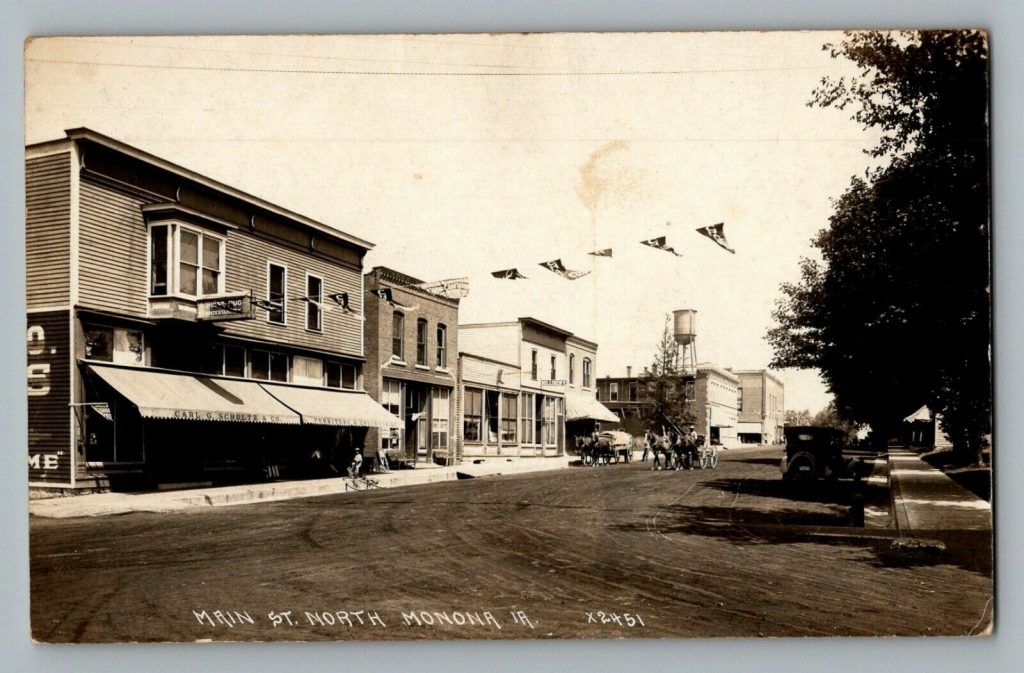
Monona, Iowa in the early 20th century

On November 11, 1918, a year and a day after the first residents of This American House moved into their new home, World War I officially ended. Two days later, schools and businesses in this small Iowa town emptied to greet ex-President William Howard Taft as his westward-bound train briefly stopped at the town depot, just two blocks from the Meier House. That same fall of 1918, the area was quarantined during a local outbreak of the international Spanish influenza epidemic. But by the following fall, after the “Home Coming” parade of its enlisted men became to date “the biggest event in the way of celebration ever held” in town, life moved on into the halcyon days the townspeople of Monona had enjoyed before the war.

Fast forward 102 years to today, November 11, 2020, and we eerily find history repeating itself – somewhat, anyway. America is hopefully about to emerge from a different sort of war, fought over the past four tumultuous years and capped off by a contentious election. A pandemic is raging, with quarantines becoming a surreal new way of life. Yet hope still prevails that by next fall, we too will be able to once again gather together in the streets, in restaurants and bars, in churches, and in our own homes. Until then, we’ll continue focusing on the greater good and making sure we’re keeping each other safe. 


Warning: Undefined variable $post in /var/www/html/wp-content/plugins/hemlock-core/inc/social_share.php on line 22

Warning: Attempt to read property "ID" on null in /var/www/html/wp-content/plugins/hemlock-core/inc/social_share.php on line 22
history, small town life

The Meier House Has Known Quarantine Before

05/04/2020

Delbert and Grace Meier House - an American System-Built Home in Iowa

We, like much of the rest of the country, are sheltering in place to help stop the spread of COVID-19. As we go about our days trying to create normalcy out of an abnormal situation, we keep finding ourselves talking about how strange this all is, how it feels unreal to be living this experience. And then we’re reminded that this is not the first quarantine this house has known.

When Delbert and Grace Meier, along with their daughters Esther and Martha, moved into their newly constructed American System-Built Home in the fall of 1917, they were most likely filled with excitement. The family had been renting an apartment above Del’s office while the house was constructed so we can imagine that the three-bedroom single family home must have been a welcome change from the cramped quarters of that temporary lodging. Little did they know that they were about to spend an extended period of time getting acquainted with their new abode.

The flu outbreak of 1918 was the deadliest pandemic to hit America, infecting an estimated 500 millions and claiming the lives of over 600,000 Americans. The country, already gripped by its entrance into World War I, struggled to respond to the virus. Much like today, cities and communities disagreed on whether quarantining was necessary. Quite famously, the city of Philadelphia held a parade that set off a second wave of the virus that went on to claim some 15,000 lives. Still, other communities heeded health officials’ warnings and closed schools, movie theaters and other public gatherings to prevent the spread. (source)

Monona, Iowa, was one of the communities that took protective measures against the Spanish flu.Delbert likely closed his law office temporarily and the girls would have stayed home from school. And so we can imagine that the Meier family sheltered in place in their newly constructed home on Page Street … and somehow everyone managed to get through it.

If you think it’s hard to shelter in place in 2020, with our televisions and computers and internet and a whole world at our fingertips, can you imagine what it would have been like in 1918/1919? With many stores closed and even some mail service interrupted by the pandemic, the Meiers would have been limited to reading the books they had on hand and working on crafts and projects for which they had already purchased supplies. Whereas we receive up-to-the-minute updates from radio, television and streaming press conferences, news would have arrived slowly to this rural community via newspaper. That newspaper must have felt like a lifeline and as a welcome distraction during the quarantine.

All this is to say that we’ll get through this, too. This experience may feel strange and the world may not look the same on the other end of the COVID-19 pandemic, but it could all be much, much worse. Medical advances of the past 100 years are helping to keep the death toll from spiking as high as it did during the Spanish flu pandemic. Global transportation networks are keeping us supplied with necessities even as much of society is shut down. But, most importantly, we could be dependent on early-20th century technology to get us through this quarantine.

Thank Gore for the internet!


Warning: Undefined variable $post in /var/www/html/wp-content/plugins/hemlock-core/inc/social_share.php on line 22

Warning: Attempt to read property "ID" on null in /var/www/html/wp-content/plugins/hemlock-core/inc/social_share.php on line 22
city boys, history, iowa, small town life

Local History: The Clydesdale Colony’s Connection to Monona, Iowa

04/24/2020

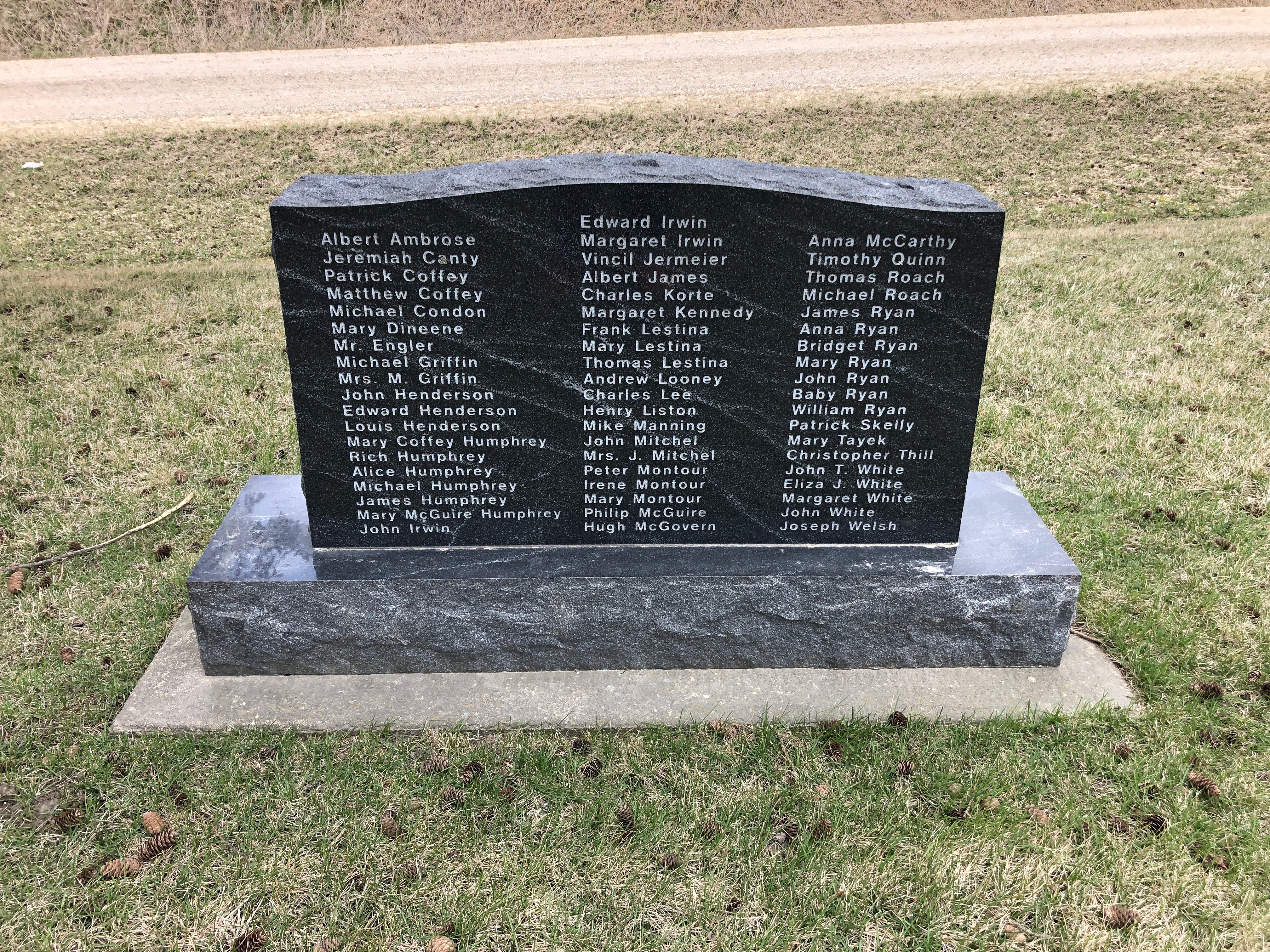
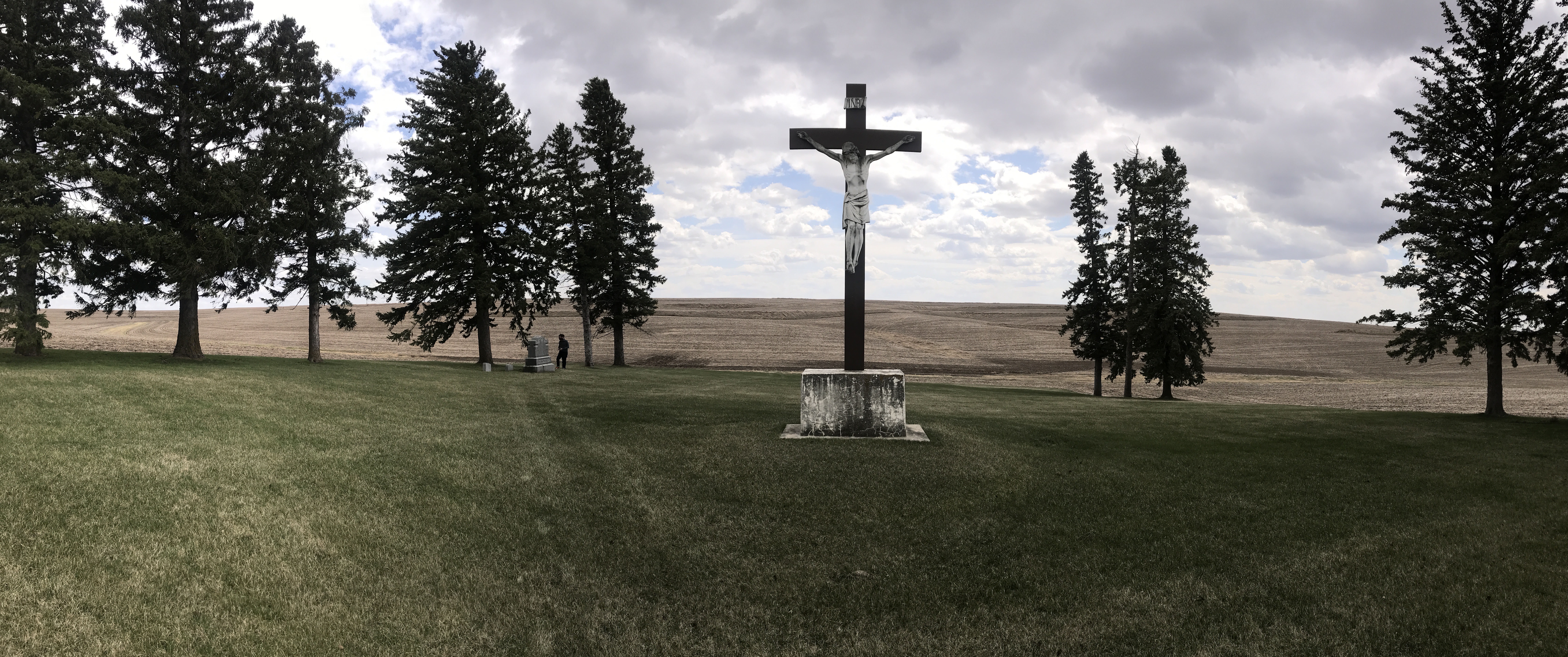
Yesterday, we set off in search of what little remains to commemorate a most remarkable social experiment that happened some 170 years ago just south of our little town of Monona, Iowa. It was a little like trying to find the wreckage of the Titanic under the vast Atlantic Ocean, but amidst our own local “seas” of prairie grass and farm fields, we finally found the hauntingly beautiful burial ground under which rests a small group of pioneers who courageously tried to make real a shared (if doomed) dream.

In 1850, just a year after our house’s first co-steward and co-namesake Grace Burgess Meier’s family migrated to this area of northeastern Iowa, another young idealist named Alexander Gardner and other representatives of a proposed “utopian society” also came here from Scotland. This company purchased land on which they established a cooperative community. Gardner returned to Scotland to raise funds and recruit more members for this venture, called the Clydesdale Joint Agricultural and Commercial Company, and oversaw its operations from afar while his fellow colonists and their families settled on the land in the winter of 1850-51. But by the time Gardner and his own family eventually emigrated in 1856, the Clydesdale Colony had disintegrated due both to a devastating outbreak of tuberculosis and dissension amongst its surviving members. Gardner would move on to New York, where, after working for the pioneering photographer Mathew Brady, he would establish himself as a renowned photographer in his own right, creating many now-iconic images of Abraham Lincoln, the Civil War, and the conspirators to Lincoln’s assassination.

Meanwhile, many of the survivors of the doomed Clydesdale Colony remained in northeastern Iowa, joining the growing communities of Monona, then a little village at the top of the Mississippi River bluffs, and nearby McGregor, a still charming resort town on the Mississippi itself. In 1869, an itinerant minister named William Carey Wright and his family moved to McGregor, where Wright briefly served as the pastor for a Baptist congregation. The earliest known photograph of his then two-year-old son, Frank Lincoln Wright, was taken there. Nearly 50 years later, long after changing his middle name following his parents’ divorce, Frank Lloyd Wright would design an American System-Built house built in 1917 just 13 miles from McGregor, in Monona: the Delbert W. and Grace B. Meier House – our house and home.

As “city boys” taking on small town Iowa living, we’ve often idealistically fancied ourselves as being “modern pioneers.” But on that serene ground under which so many brave (if also idealistic) pioneers lay, whose shared dream and lives were decimated by a pandemic (the echoes of now are certainly not lost on us), we realized we certainly can’t stand with them. But perhaps FOR them, we might, in encouraging everyone who is reading this, as well as reminding ourselves, to stay safe, stay socially responsible, and stay steadfast in pursuing your dreams, wherever they may lead you.


Warning: Undefined variable $post in /var/www/html/wp-content/plugins/hemlock-core/inc/social_share.php on line 22

Warning: Attempt to read property "ID" on null in /var/www/html/wp-content/plugins/hemlock-core/inc/social_share.php on line 22
DIY, history, recipes

Happy Birthday Carole Lombard! Thanks for Introducing Us to Mustard Soaks

10/06/2019

Today – October 6th – is Carole Lombard’s birthday. We have a little tradition in our house. When a celebrity birthday pops up – especially if that celebrity is a beautiful actress of yesteryear (bonus points if she met a tragic end!) – we watch a film or two to celebrate. Today, to honor Ms. Lombard, we watched her 1932 film No More Orchids. And that’s how we learned about mustard soaks.

“Did she say mustard?” I asked The Mister as the grandmother in the film mixed a foot soak for Carole Lombard’s character.

“That can’t be right,” he replied.

But, yes, mustard soak! A quick Google search confirmed that a mustard soak is indeed a thing. An old-timey English thing, to be exact. Mostly used for heading off colds and flu. In the film, the grandmother made her own mustard soak – likely using ingredients similar to this recipe on Joy the Baker – but here in the 21st century you can also buy Dr. Singha’s Mustard Bath, premixed mustard seed powder, eucalyptus, rosemary, wintergreen and thyme, on Amazon.

With temperatures dropping and cold and flu season just ahead, we’re certain to try a mustard soak sometime soon. You better believe we’ll be picking up the ingredients for the DIY mix on our next trip to the grocery store! Follow us on Instagram for a blow by blow on the mustard soak.

Speaking of Carole Lombard, take a little peek at the house in Fort Wayne, Indiana where she spent her early years.

Image Credit: IMDB


Warning: Undefined variable $post in /var/www/html/wp-content/plugins/hemlock-core/inc/social_share.php on line 22

Warning: Attempt to read property "ID" on null in /var/www/html/wp-content/plugins/hemlock-core/inc/social_share.php on line 22