follies, Maintenance

The Mystery of the Drip in the Basement: Solved!

05/20/2015

The Mystery of the Drip in the Basement: Solved!

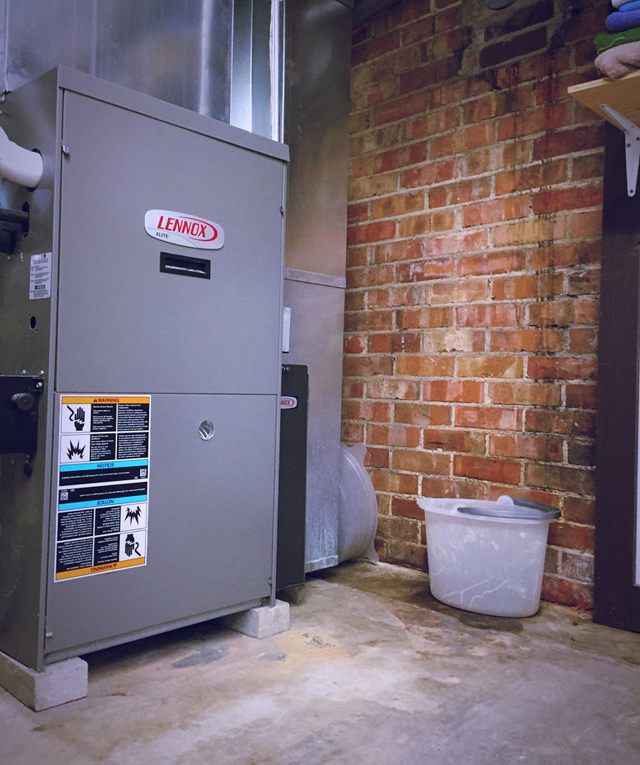
For the past couple of months we’ve been dealing with a slow leak in the basement. Drip, drip, drip, it’s a tiny little leak but it adds up over time. Such as when we’ve been away for a week. And then we return to find an overflowing bucket sitting in the middle of a puddle. In a fit of desperation last weekend, I finally got to the bottom of this drip!

Every time we’ve encountered the drip over the past few months we’ve come up a new theory.

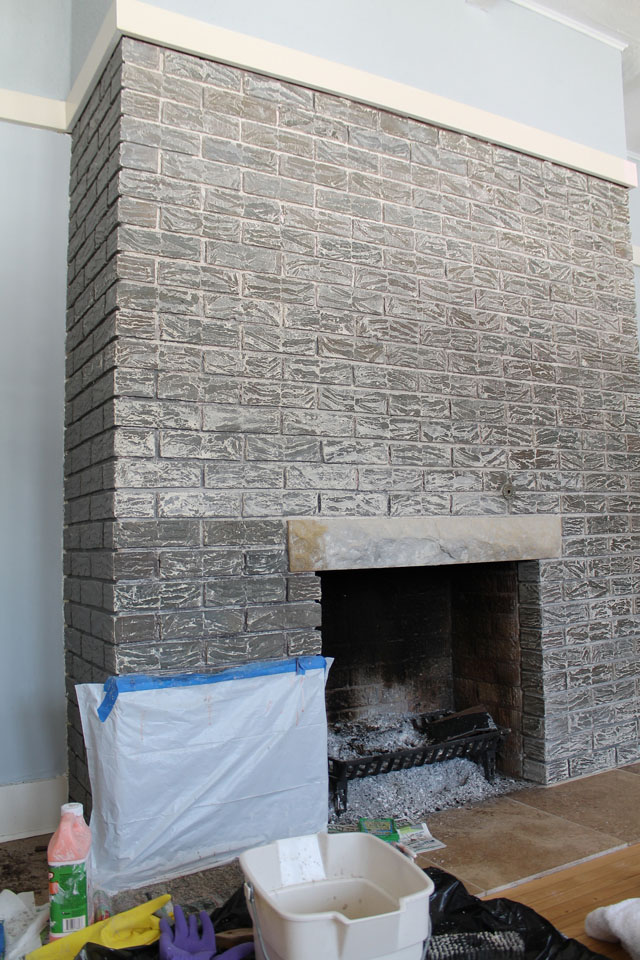
My first thought was that the drip was somehow related to the chimney. Based on the drip’s close proximity to the base of the chimney and the fact that it first made its presence when the snow first started melting this spring I thought that was a logical answer. Perhaps the melting snow and spring rains were making their way down the chimney and then dripping into the basement. We already know that the interior of the chimney is crumbling so that helped add some validity to this theory.

But what if something is dripping from the bathroom on the second floor and making its way all the way to the basement? We ruled that one out when we reasoned that the bathroom plumbing is not in line with the drip location.

What if the house is haunted and these are the tears of ghosts who are stuck in the attic? OK, maybe that one’s a little more far fetched. But, hey, this house IS almost 100 years old! Anything could happen, right?

When I started to really reason it out, however, the cause of the drip was pretty obvious. I stood there in the basement, right beside the drip, and thought about what was directly above me. There’s no plumbing up there but there is … a refrigerator. A refrigerator with an ice maker. I sprinted up the stairs, flashlight in hand, and pulled the refrigerator away from the wall. Eureka! A little pool of water had collected near the baseboard and was slowly dripping down into the basement.
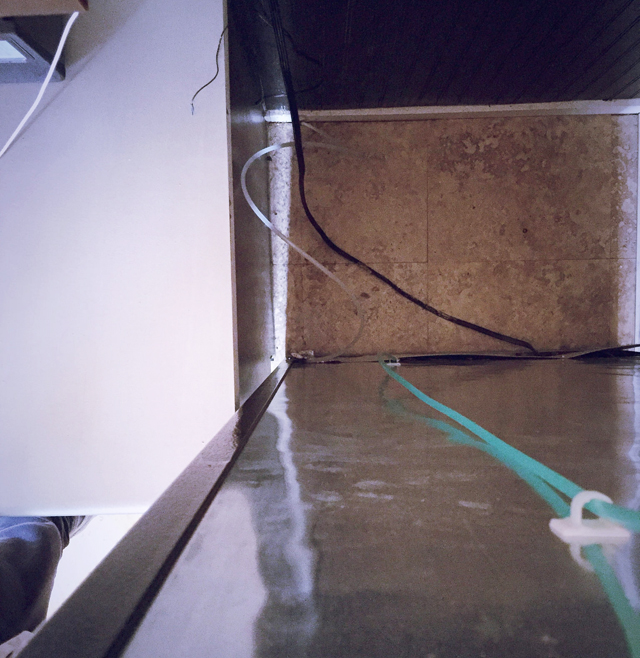
drip2Having found the cause of the drip, now I just had to make it stop. I lifted the little lever inside the freezer that stops ice production but that didn’t do the trick. Still, I was confident that it was the ice maker, or at least the water line feeding into it, that was causing the problem. I checked the water line and it seems fine. Finally, I noticed that the refrigerator itself is leaking. But I still wasn’t quite ready to give up on the ice maker theory.
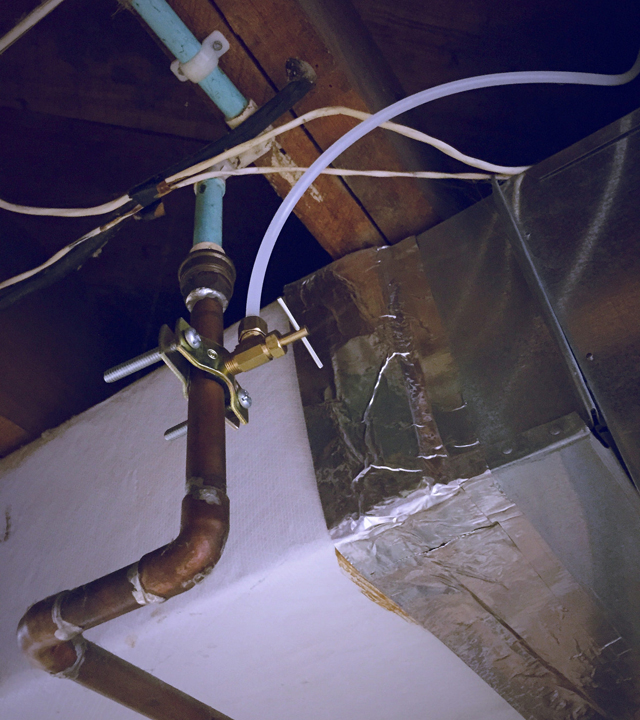
drip3Armed with the flashlight, I was able to follow the path of the tube that connects to the refrigerator tot he main water pipe. (Gotta love an old house with an unfinished basement!) Lo and behold, after I turned off the water supply for the ice maker, the drip stopped. So it is the ice maker that’s causing the issue. Well, we’ll just have to make our own ice for the time being. The refrigerator needs to be replaced sooner than later so I think we’ll survive making ice the old fashioned way in the meantime. I’m just happy that the mystery of the leak has finally been solved!

Images: This American House


Warning: Undefined variable $post in /var/www/html/wp-content/plugins/hemlock-core/inc/social_share.php on line 22

Warning: Attempt to read property "ID" on null in /var/www/html/wp-content/plugins/hemlock-core/inc/social_share.php on line 22
American made, furnishing, setting up home

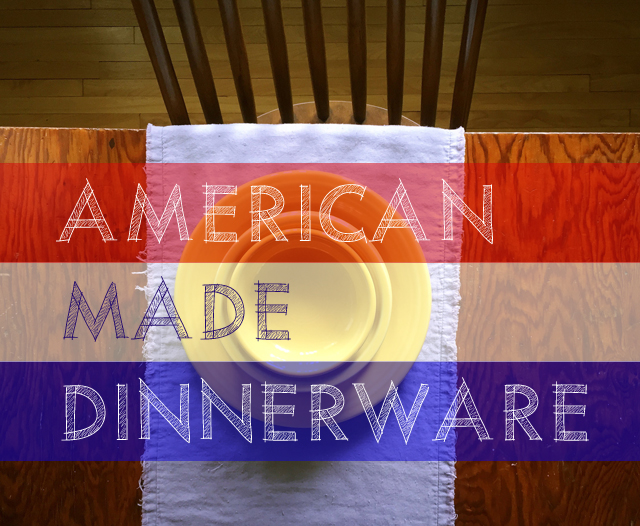
American Table: Dinnerware Made in the USA

05/18/2015

Dinnerware Made in the USA

The Mister and I have been eating off yellow Fiestaware for well over a decade now. When we bought it all those years ago, it was out of a love of kitschy fun colors and Fiesta’s simple design. Now, as we’re outfitting our home with American-made and vintage wares, I’m realizing that our beloved Fiesta is the perfect dinnerware. Home Laughlin, Fiesta’s maker, is based right here in the United States.


Fiestaware isn’t for everyone, of course. Fortunately, Homer Laughlin has company in the American-made dinnerware category. Check out the full list and add any I may have missed in the comments.

  • Home Laughlin China Company has been making Fiestaware in West Virginia since 1936. In addition to offering tours, folks makes the pilgrimage to their Newell, West Virginia factory of their big tent sale and outlet store.
  • Anchor Hocking products are manufactured in Lancaster, Ohio and Monaca, Pennsylvania. You may associate them most with bake and prep pieces, but they also make a line of dinnerware.
  • Pickard China has been manufactured in Antioch, Illinois since the 1930s. Known for making the official White House china service, Pickard is American’s oldest fine china manufacturer.
  • HF Coors’ dinnerware is produced in Tuscon, Arizona. From the simple American White and American Bistro lines to the Frank Lloyd Wright dinnerware, HF Coors has a nice selection of tabletop goods.
  • Lenox also has a wide selection of American made dinnerware, with designs from Kate Spade, holiday patterns and many other options.
  • Bennington Potters produces beautiful stoneware in Vermont. Started in 1948 by David Gil, Bennington makes stoneware pottery intended for everyday use. In addition to dinnerware, they also produce bakeware and serving pieces.
  • Emerson Creek manufactures ceramic dinnerware, as well as a full range of pottery, in  the Blue Ridge Mountains of Virginia.
  • Simon Pearce glassware and dinnerware are handmade in the United States. Their operations in Vermont are hydro-powered and include a mill and restaurant overlooking the falls.


Warning: Undefined variable $post in /var/www/html/wp-content/plugins/hemlock-core/inc/social_share.php on line 22

Warning: Attempt to read property "ID" on null in /var/www/html/wp-content/plugins/hemlock-core/inc/social_share.php on line 22
landscaping

Flower Power: Bringing Spring Indoors

04/08/2015

Flower Power: Bringing Spring Indoors

After a long, cold and snowy winter, the first spring flowers feel like a gift from Mother Nature. It’s as if she’s saying, “Congratulations! You survived another upper Midwest winter!” And even when those flowers pop up where they’re not supposed to, it’s exciting to see their colorful little buds sprouting up from the ground.

When we pulled up the flower beds that the previous owners had planted around This American House, we relocated many of the plants and flowers. We also pulled up a bunch of bulbs that I threw in a bag with the intention of replanting later. We spread grass seed in the former flower beds and called it a season.

It looks like we missed a few bulbs … and I have to say that I’m not mad at that. When I saw these little yellow and purple flowers standing tall(ish) among the not-quite-green grass, I actually uttered the words, “Well hey there little guys! What are you doing here?” Although I was surprised that we had missed a few bulbs, the sight of the colorful flowers in the grass was delightful nonetheless.

Spring Flowers

Before I left the house to return to the city on Sunday, I pulled the flowers, bulbs and all, from the ground and dropped them into a little vase. They may not survive, I thought, but at least I’ll be able to enjoy the flowers on the drive back to the city.

Much to my surprise, the flowers not only survived the drive, they’re still thriving three days later. I’m not a botanist so I have no idea what these flowers are*. All I know is that I’m gladly accepting this gift from Mother Nature. And now I know that I need to find that bag of bulbs and find a place to plant them so that I can enjoy a little spring treat again next year.

*Thanks to my Instagram followers, I’ve learned that these are crocuses. According to Old Farmer’s Almanac, “Small bulbs like crocus not only provide winter garden color, but they naturalize, meaning that they spread and come back year after year—with minimum care—for an ever-larger display. As a bonus, deer, squirrels, and rabbits rarely bother early little bulbs.” Now I really do need to find a place to replace the bulbs I pulled up last year!

Images: This American House


Warning: Undefined variable $post in /var/www/html/wp-content/plugins/hemlock-core/inc/social_share.php on line 22

Warning: Attempt to read property "ID" on null in /var/www/html/wp-content/plugins/hemlock-core/inc/social_share.php on line 22
American made, furnishing, setting up home

12 Mattress Brands That Are Made in America

03/30/2015

Mattresses Made in the United States of American

In our attempt to furnish the house with only secondhand or American made products, I found myself researching mattresses that are manufactured in the United States. As it turns out, there are quite a few mattresses companies with manufacturing facilities in the US. From traditional inner spring to the newer latex and memory foam mattresses, from budget to luxury brands, check out this list of American made beds.

  • Casper is the new kid on the mattress block. Covers and panels are sewn in Illinois and South Carolina and the foam for the mattresses is poured in Pennsylvania and Georgia.
  • Tuft and Needle mattresses are designed, sourced and manufactured in the States. The foam is poured and cut in the states, the fabric is sourced from a mill in the Carolinas and the mattresses are finished at a factory in California.
  • Kingsdown mattresses has been based in North Carolina for more than 100 years. They still produce some mattresses there, but they also have factories in California, Oklahoma, Virginia, as well as global manufacturing facilities.
  • The Original Mattress Factory has factory store locations in nine states, as well as available nationwide online. They offer both foam and pillow top mattresses.
  • Sealy mattresses are manufactured in three factories in the United States. The brand makes traditional innerspring mattresses, as well as hybrid, gel memory foam and latex foam mattresses.

  • Saatva Mattresses are produced in factories in twelve US states and are distributed through 35 fulfillment centers. The inner spring mattresses feature organic cotton covers and bio-based foam.
  • Englander has seven factories throughout the United States. They do not sell direct to the public so check mattress stores for the label.
  • Cozy Pure’s organic latex mattresses are manufactured in Norfolk, Virginia. The company also produces bedding and mattress pads.
  • Stearns and Foster mattresses are made in the USA, although I couldn’t find out exactly where.
  • Sealy operates 25 bedding plants in the U.S., producing both innerspring and foam mattresses.
  • EasyRest adjustable beds and mattresses are made in factories in Louisville and Georgetown, Kentucky and Nashville, Tennessee.
  • Thomasville Bedding Company has been manufacturing their mattress in Thomasville, Georgia since 1969. They make both innerspring and latex mattresses, as well as custom mattress and box springs.

Image: This American House


Warning: Undefined variable $post in /var/www/html/wp-content/plugins/hemlock-core/inc/social_share.php on line 22

Warning: Attempt to read property "ID" on null in /var/www/html/wp-content/plugins/hemlock-core/inc/social_share.php on line 22
renovation, stripping paint

Brick by Brick: Slowly Stripping the Fireplace
Adventures in Stripping

03/26/2015

Refinishing the Fireplace Brick in Our American System Built HomeThe last time I talked about the fireplace was just after the winter holidays. I learned a very important lesson in that first big attempt at removing paint from brick. DON’T BE A HERO.

You may think it’s a good idea to slather Citri-Strip across the entire surface of the fireplace but it’s not. You’re going to have to scrape and scratch and rub and wash every last inch of that fireplace to get the paint and stripper off. It’s going to be messy. And it’s going to work muscles in your body you didn’t even know you have. And you may even end up half-assing a big section of it because you’re too damned tired to muster the elbow grease that it takes to really make a piece of steel wool work.
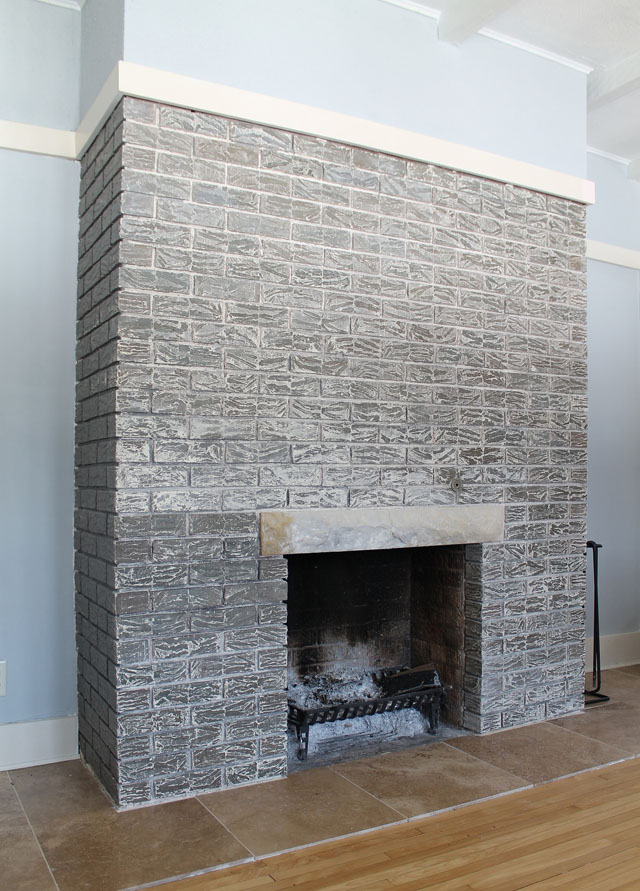
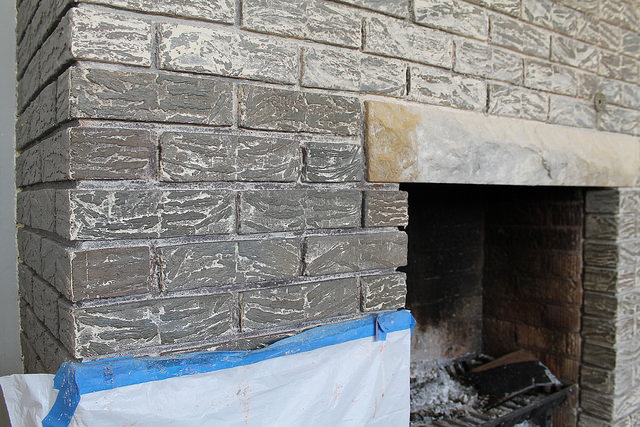
Stripping Brick Fireplace

For the record, I had every intention of stripping the fireplace in small sections. I had done my Pinteresting and read quite a few blog posts about the trials and travails of stripping brick. I had indeed been working in small patches when The Mister announced that he was going to help. I left the room for a little while and when I came back I found that he had spread stripper across half of the fireplace.

Now, folks, if there’s one thing I’ve learned in my sixteen years as a couple, it’s to appreciate the help you’re getting. So while my first reaction was to stop The Mister I decided to just go with the flow. Um, yeah, I should’ve said something. Many, many, many hours later, we were knee deep in paint goo, my back was about to give out and The Mister was declaring the whole thing a disaster.

OK lesson learned.

Adventures in Stripping: Refinishing the Fireplace in Our American System Built HomeThe new approach to stripping the fireplace is much more methodical. First, I tape a garbage bag to the area of the fireplace that’s below where I’ll be working. I don’t want any of the stripper, paint chips or goo to drip down on the bricks that are already finished. I also tape plastic garbage bags to the floor to catch the mess. Then, I apply the stripper to the bricks and let it work its magic over a twenty four hour period. I’ve been using steel wool and old toothbrushes to apply the stripper.
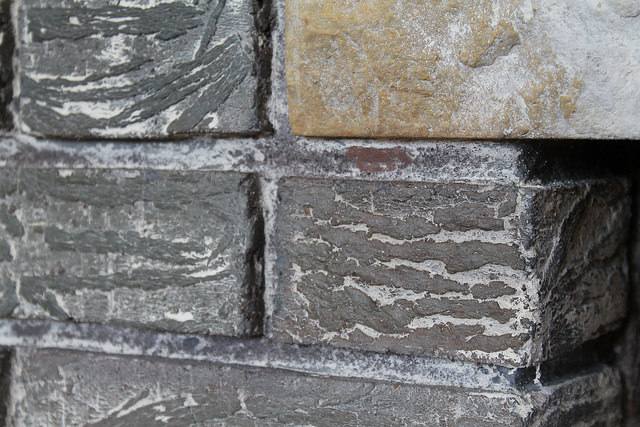

After twenty four hours, the arduous task of scraping the paint off the bricks begins. The most effective tools for removing the stripper and paint are wire brushes of varying sizes and toothbrushes. And even with wire brushes, a lot of pressure must be applied to really remove the paint from the bricks. I’ve also been using steel wool and good old fashioned elbow grease.

Close Up for Stripped Fireplace Brick

By taking it a little slower and working in small sections, we’re getting much better results. Not only do the bricks get cleaner, but we’re actually even getting the paint off the mortar as well. This is actually a delightful surprise. I wasn’t expecting that we’d actually be able to strip the paint from the mortar at all.

As I mentioned in the previous post about stripping the fireplace, we were surprised to discover that the bricks are not red. When we stripped the dark gray top layer down to the white layer and then down to dark gray brick, we had an “oh shit” moment. I mean, why are we going through all this trouble just to go from dark gray to, well, dark gray? But then when you see the lintel stripped of paint and you stand back and see how the bricks have more depth and character when they’re stripped of paint, well, that makes it all worthwhile.

Images: This American House


Warning: Undefined variable $post in /var/www/html/wp-content/plugins/hemlock-core/inc/social_share.php on line 22

Warning: Attempt to read property "ID" on null in /var/www/html/wp-content/plugins/hemlock-core/inc/social_share.php on line 22